
PMCJ to Del Monte PH: Land-grabbing, harassments, and continuous harms are not ‘nurturing the land’ and ‘uplifting communities’

Quezon City, Philippines — The Philippine Movement for Climate Justice (PMCJ) responds to the recent portrayals of Del Monte Philippines, Inc. (Del Monte) on social media and the internet. The positive narratives Del Monte touts overlook long-standing concerns about land dispossession, environmental degradation, and human rights issues linked to Del Monte’s operations in Bukidnon and Misamis Oriental.
The so-called success of Del Monte’s agribusiness plantation is a cover-up of an unscrupulous system of continuing historical land dispossession dating back to the American colonial period, where monocropping and formal land titling disrupted indigenous peoples’ land rights, impacts that continue to shape present-day conflicts.
An international watchdog linked Del Monte to being complicit in the 2017 killing of Manobo-Pulangiyon leader Renato Anglao in Bukidnon. After requesting that local rancher and mayor Pablo Lorenzo III give their land back—which Lorenzo's corporation was utilizing for agribusiness plantations—Anglao was shot and killed. Lorenzo shares ownership of the adjacent Kiantig Development Corporation, which had a crop producer-growership agreement with Del Monte.
“Del Monte, like other notorious global food giants, is not as good as it presents itself to be. These business-as-usual narratives of Del Monte only wash their hands with the blood of the indigenous peoples who are killed due to their resistance to the continuing business partnership of profit-hungry Del Monte and the blood-stricken land-grabbing corporations in Mindanao,” said Daisy Aballe, senior Mindanao campaigner on food, land, and water of PMCJ.
A 2023 report found traces of “highly toxic agricultural pesticides” in dust and urine samples from residents living near pineapple plantations in Davao, raising alarm that agrochemical drift and contamination affect not only farm workers but also their families and surrounding communities — including children.
“International studies demonstrate that pesticide residues from pineapple plantations can kill aquatic life, disrupt ecosystems, and pose serious health risks to wildlife — highlighting that exposure to agrochemicals is harmful to both humans and the environment. Climate-resilient and community-centered agriculture cannot rely on extractive monocrop systems that heighten vulnerability and undermine food sovereignty,” Aballe stressed.
In July 2025, Don Carlos Bukidnon United Farmers Association Inc. (DCBUFAI), the Philippine Movement for Climate Justice (PMCJ), and other groups held a protest in front of the Department of Agrarian Reform (DAR) Region X office in Cagayan de Oro, where a dialogue was simultaneously held between the DAR and the farmers. They urged the DAR to expedite the process of awarding the Certificate of Land Ownership (CLOA) for the land the farmers have been tilling for decades. Del Monte pineapple plantation has been encroaching on rice lands, intimidating and threatening rice farmers to give way for pineapples.
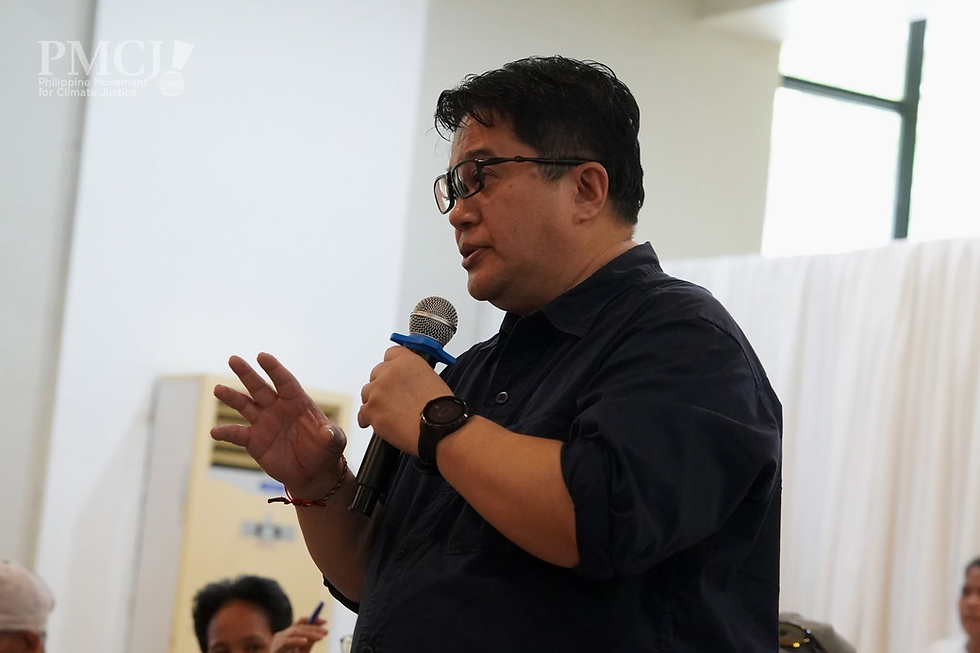
“The people of Bukidnon and the whole of Mindanao, especially the farmers, have been fighting multiple battles to uphold their rights. This historical land conflict of Del Monte against the marginalized small farmers and indigenous people of Bukidnon and Misamis Oriental is a long-standing, systemic, institutionalized land grabbing that is tacitly allowed by the Philippine government,” said Ian Rivera, national coordinator of PMCJ.
In August 2010, then-DCBUFAI President Franklin Labial was killed inside his home. Farmers reported that a day before, Labial had gone to Davao Agricultural Ventures Corp. (DAVCO)’s office to appeal to the company to stop the clearing operations it had conducted on the pineapple plantation. The DCBUFAI president and officials, through the years, continue to face multiple cases of harassment from those who have vested interests in their land. According to DCBUFAI, DAVCO had a crop producer-growership agreement with Del Monte.
“No matter how many times they suppress and violate the rights of the people on these lands, the people will fight back and reclaim these lands. For peace, justice, and genuine development to exist on these lands and for the peasants and indigenous peoples to survive the impacts of the climate crisis, Del Monte and all other big agribusiness corporations in Mindanao must cease operations and return these lands to the rightful owners. Eventually, these lands will be reclaimed by peasants and indigenous people to secure their survival amid the multiple crises they face. For them, this is what justice is about, and climate justice demands meaningful, systemic change,” Rivera ended. ###
For Mindanao-based media, contact:
Pat Pangantihon
Policy and Communications Officer-Mindanao
Philippine Movement for Climate Justice
For Metro Manila-based media, contact:
Sheila Abarra
Senior Media and Communications Officer
Philippine Movement for Climate Justice
Viber: +639916692356
WhatsApp: +639380898327


Comments